
Shakespeare once wrote, “What’s in a name?” Well, when it comes to sustainability reporting today, the answer is … a lot.
While a seemingly small, even innocuous choice, a report title is a critical decision in the reporting publication process. In just a few words, it communicates where your organization is focused, whether that is compliance, social responsibility, storytelling, or real-world impact.
But, here’s where things get messy.
Many companies use sustainability reporting titles interchangeably. What used to be an Environmental, Social, and Governance (ESG) Report becomes a Sustainability Report which becomes an Impact Report. These titles are often following trends and stakeholder expectations, however, these aren’t just different labels for the same thing.
Before publishing, it’s worth pausing to ask: what is your title communicating?
Each term carries a specific meaning and communicates something fundamentally important about an organization’s priorities, maturity, and approach to sustainability. In other words, report naming is strategic, not cosmetic.
So before publishing, it’s worth pausing to ask: what is your title communicating?
Here’s a closer look at the meaning behind popular naming conventions and why choosing the right name matters.
Three Sustainability Trends Driving Naming
Let’s face it, report naming wasn’t always so difficult. Today’s external pressures, evolving regulation, and a wider range of stakeholders have created the need to communicate clearly and carefully. There are a few key forces driving how companies think about report naming altogether.
First, sustainability terminology is becoming politically charged.
The acronym “ESG” has faced intense backlash in recent years and, in some cases, been actively challenged by politicians, regulators, media voices, and advocacy groups. What started as a technical framework that supports investor-based reporting has become a loaded term. As a result, many companies aren’t abandoning ESG practices, they’re simply moving away from using “ESG” in report titles, opting for more neutral, albeit less poignant, terminology, like “sustainability” or “impact.”
Second, reporting is becoming more formalized.
Sustainability reporting has evolved and become more structured, standardized, and regulated, particularly in Europe. Frameworks like CSRD, ISSB, and TCFD are driving more consistent and auditable disclosures, raising the bar for rigor and comparability. In turn, report titles need to reflect alignment with these expectations and reporting structures.
Choosing the wrong title can create confusion, invite scrutiny, or simply miss your audience entirely.
Third, companies are rethinking how they talk about sustainability.
Organizations aren’t stepping back from sustainability, but they are treading lightly. A recent study of global companies found that 85% have maintained or accelerated their sustainability efforts, even amid political pressure, often continuing the work while simply adjusting how they communicate it. The result is a shift toward less charged language that can resonate across audiences.
So, what’s the challenge?
Choosing the wrong title can create confusion, invite scrutiny, or simply miss your audience entirely. Naming is no longer simple marketing, it’s part of how companies navigate credibility, compliance, and reputation.
5 Naming Conventions, And How They’re Different
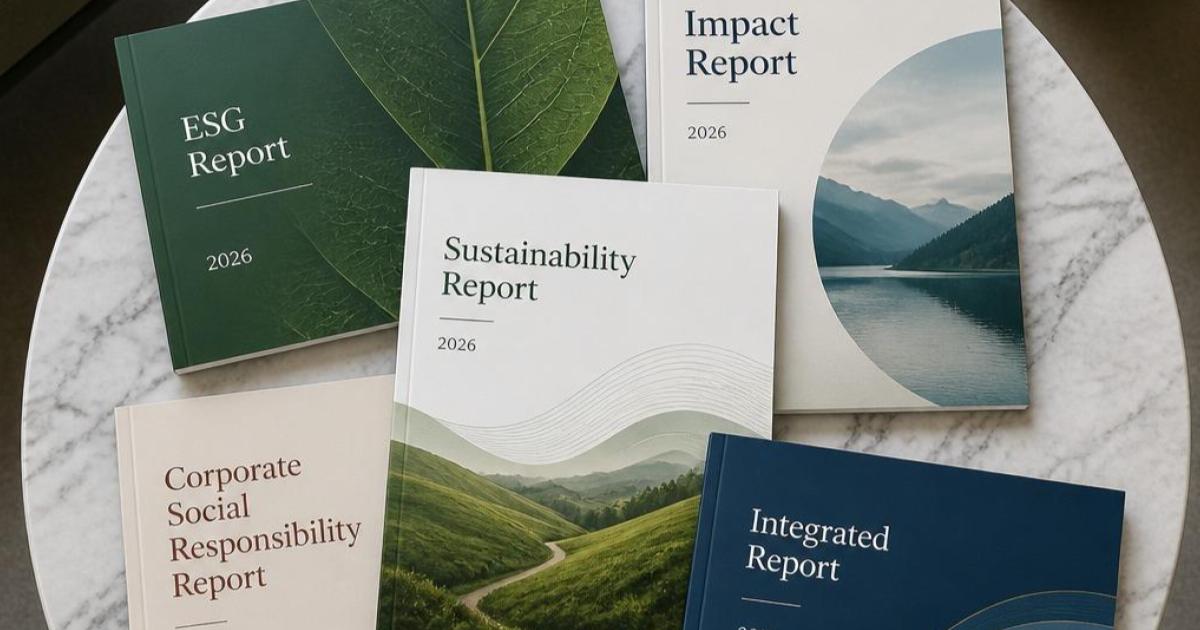
There’s no shortage of creative sustainability report titles, but sustainability terminology is not easily interchangeable. Here’s a look at five common naming conventions and what they communicate before anyone turns the cover.
Corporate Responsibility (CR) / Corporate Social Responsibility (CSR) Report
What is it?
- CR/CSR reporting represents one of the earliest approaches to sustainability and is rooted in ethics, philanthropy, and social good.
What does it communicate?
- A focus on community engagement, charitable initiatives, and corporate citizenship
- Prioritizes values and reputation over enterprise-wide risk and performance
- Typically narrative-driven versus metric-heavy
When to use it?
- Companies that want to emphasize philanthropy, community engagement, employee programs and ethical governance
Who is it for?
- Local communities and nonprofit partners
- Employees
- External stakeholders interested in social responsibility and value-driven businesses
Environmental, Social, and Governance (ESG) Report
What is it?
- ESG reporting is a metric-driven disclosure framework focused on how environmental, social, and governance factors impact financial performance, risk, and long-term value.
What does it communicate?
- A data-driven view of risk, governance, and measurable performance designed to support investor expectations and align with disclosure frameworks
When to use it?
- Public companies focused on capital markets
- Heavily regulated or investor-driven sectors
- Organizations prioritizing financial materiality and comparability
Who is it for?
- Investors and analysts
- Regulators
- ESG rating agencies and financial stakeholders
Sustainability Report
What is it?
- A flexible report that covers broad narratives across environmental performance, social commitments and long-term strategy.
What does it communicate?
- A mix of performance data and narrative storytelling
- A comprehensive, enterprise-wide view of sustainability
When to use it?
- Organizations of various size across all industries
- Organizations balancing compliance and storytelling
Who is it for?
- Investors
- Employees
- Customers
- Communities and broader stakeholders
Impact Report
What is it?
- A narrative-driven report focused on the tangible impact a company has on people, communities, and the environment.
What does it communicate?
- Focuses on real-world outcomes that showcase measurable results, progress against goals and/or evidence of change over time
- Storytelling-led report with less emphasis on technical disclosure frameworks
When to use it?
- Purpose-driven organizations
- Companies with strong brand-led sustainability positioning
- Organizations prioritizing engagement and outcomes
Who is it for?
- Customers and consumers
- Employees
- Communities and advocacy groups
Non-Financial Information (NFI) Report / Integrated Report
What is it?
- A report that combines financial and non-financial sustainability disclosures in a single, cohesive narrative.
What does it communicate?
- Shows how sustainability is embedded in financial performance and strategy
- Focuses on long-term value creation
- Structured, compliance-driven, and data-heavy
When to use it?
- Large, mature organizations
- Companies in regulated markets
- Organizations linking sustainability directly to financial outcomes
Who is it for?
- Investors and analysts
- Regulators
- Boards and executive leadership
A Name Doesn’t Just Describe, it Defines
So, what is in a name? Quite a bit.
A report by any other name does not signal the same level of rigor, intended audience, or strategic intent. Terms such as “Sustainability,” “ESG,” “Impact,” and “Integrated” are not interchangeable labels, they’re early declarations of priority and positioning.
Titles tell your stakeholders what you measure, why it matters, and who you’re speaking to before they turn the first page. But they also answer a deeper question: how do you want to show up? As a company grounded in compliance and rigor? As a brand driven by purpose and storytelling? Or as an organization bridging both?
Titles tell your stakeholders what you measure, why it matters, and who you’re speaking to before they turn the first page.
In a reporting landscape shaped by scrutiny, regulation, and rising expectations, naming is no longer cosmetic. It’s strategic.
Bonus tip: once you’ve landed on the right title, there’s one more opportunity to elevate it by adding a theme. A strong theme can bring your report to life, connecting the data to a broader story and making your message more memorable without sacrificing clarity or credibility.
If Shakespeare were writing sustainability reports today, he might agree that, when it comes to reporting, a name doesn’t just describe, it defines.